
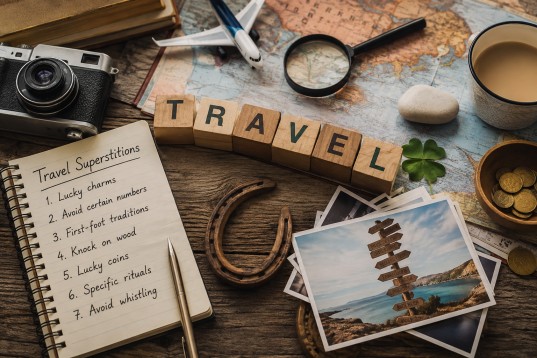
Across the world, travelers often rely on age-old customs and superstitions to ensure safe and fortunate journeys. These practices, though rooted in folklore, continue to hold significance as travelers embrace them for peace of mind and protection. Among these traditions, people from various cultures believe that carrying a clove of garlic can ward off bad luck and negative energy. This practice, especially prevalent in the Balkan region, involves placing a clove inside luggage before embarking on a trip.
Another common ritual observed by air travelers is the practice of touching the outside of an airplane before boarding. This gesture, seen as a symbol of trust and gratitude, is believed to secure a safe flight and help reduce anxiety associated with flying. Similarly, stepping onto the aircraft with the right foot first is a widespread belief in multiple cultures, where it is thought to bring good fortune and set a positive tone for the journey.
In certain regions, such as Eastern Europe and the Middle East, a unique tradition involves spilling water behind a departing traveler. This act is intended to symbolize a smooth and successful trip, with the flowing water representing safety and a seamless return home. Additionally, the avoidance of certain numbers considered unlucky is common among travelers. In the West, the number 13 is often shunned, while in East Asia, the number 4 is avoided due to its association with death. In Italy, the number 17 carries similar superstitions, leading to the omission of these numbers in hotels, buildings, and airlines.
Travelers from Slavic countries may also observe the tradition of sitting on their packed luggage for a moment before leaving. This pause allows individuals to relax, ensure nothing is forgotten, and mentally prepare for the journey ahead. Conversely, sweeping the floor immediately after someone’s departure is avoided in several cultures, as it is believed to bring bad luck or disrupt the traveler’s safe return. Instead, families wait until their loved ones have reached their destination before tidying up.
These travel traditions, while lacking scientific backing, offer a fascinating glimpse into global cultures and their ways of seeking reassurance before embarking on a journey. Whether they serve as comforting rituals or symbols of good luck, these practices highlight the universal desire for safe and successful travels.